
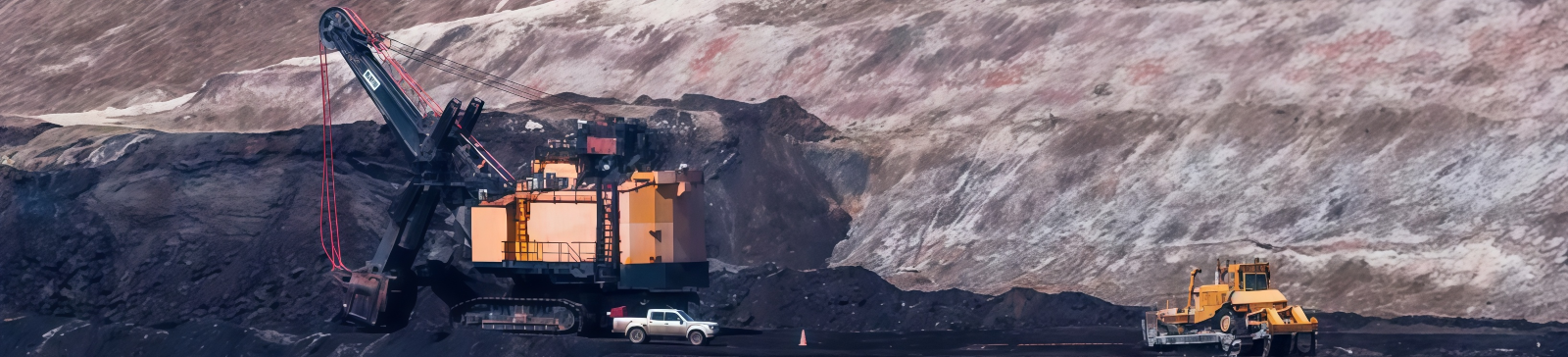
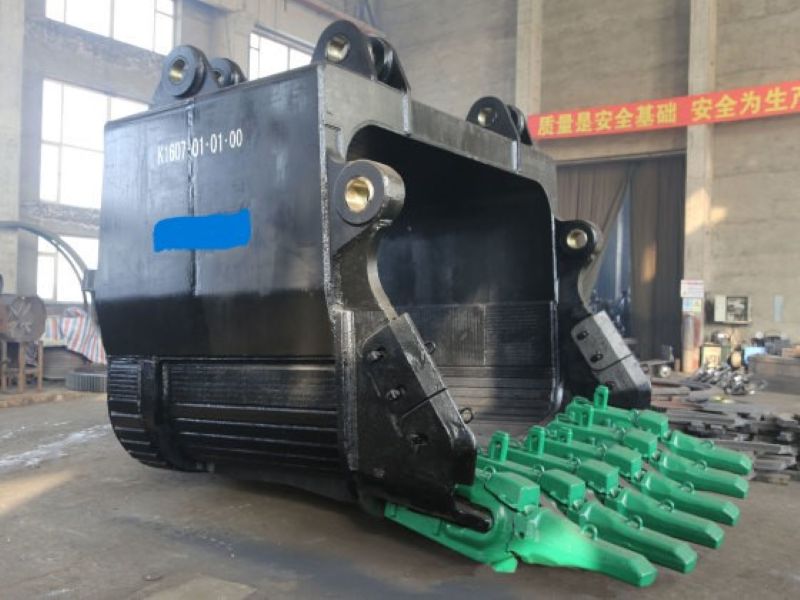
Rope shovel dippers, common working components in construction machinery, are widely used in excavators, loaders, and other equipment. Their structural design directly affects work efficiency and service life. Rope shovel dippers typically consist of several key parts, including the bucket body, cutting edge, side plates, bucket teeth, ear plates, and connecting parts, each performing a different function during operation. The following details their structural features, material selection, and application scenarios.
The bucket body is the main structure of the rope shovel dipper, featuring a U-shaped or V-shaped design. It is welded from high-strength steel plates, with a thickness varying from 10 to 30 mm depending on the working conditions. U-shaped bucket bodies are suitable for loading loose materials such as sand and coal, while V-shaped bucket bodies are used to penetrate clay or frozen soil layers with higher resistance. The cutting edge is welded to the front of the bucket body. The cutting edge is typically made of wear-resistant alloy steel, with a thickness of up to 40 mm, and is continuously welded to the bucket body, responsible for cutting into the material layer. The cutting edge features a serrated or wavy design to reduce frictional resistance during operation and improve cutting efficiency.
The side plates, located on both sides of the bucket body, are composed of double-layered steel plates. The outer steel plate is approximately 1.5 times thicker than the inner plate, with cushioning material filling the gap. The side plates primarily bear lateral forces, preventing lateral material leakage. In mining environments, manganese steel protective plates are added to the outer side plates, increasing the thickness to 25 mm to protect against ore impacts. The bucket teeth, as consumable parts, are fixed to the cutting edge with pins. Each tooth weighs between 3 and 8 kg, is made of high-chromium cast iron, and undergoes a carburising treatment, achieving a Rockwell hardness of 55 HRC or higher. Teeth are spaced 150 to 200 mm apart, forming a continuous cutting surface.
The ear plates are key components connecting the rope shovel dippers to the boom. They are forged from Q345B low-alloy steel, with a thickness ranging from 50 to 80 mm. The ear plate structure includes a main ear plate and a secondary ear plate. The main ear plate bears the vertical load, while the secondary ear plate shares the lateral moment. The connecting components include pins and bushings. The pin diameter ranges from 60 to 120 mm, depending on the equipment model and is hard chrome plated. The bushing has an embedded graphite copper bushing to ensure flexible rotation. Reinforcing ribs are distributed in a grid pattern on the inner wall of the bucket, with a spacing controlled within 400 mm. The rib height is 1/3 of the bucket height, effectively preventing bucket deformation.
The liner is installed on the internal contact surface of the bucket and features a replaceable design. It is 12 to 16 mm thick and has a wear-resistant weld overlay. During river dredging operations, a rubber protective layer is added to the liner to reduce the adhesion of sticky silt. The guide plate is located at the rear of the bucket at a 15 to 30 degree angle, guiding material flow towards the central area. Wear-resistant blocks are arranged at the junction of the bottom and side walls of the bucket, each measuring 150 × 80 mm, and are bolted for easy replacement. For operations in frigid regions, all welded parts must undergo low-temperature impact testing to ensure the material's toughness meets standards at -40℃.
Different application scenarios place specific requirements on the structure of rope shovel dippers. Rope shovel dippers used on construction sites emphasise lightweight design, with thinner plates and lower reinforcing rib density; mining rope shovel dippers generally adopt an all-cast steel structure, with plate thickness increased by 40% in key areas. Agricultural rope shovel dippers have sieve holes in the side plates for easy sieving of soil and stones. Regarding maintenance, the wear of the bucket teeth should be checked every 50 hours, and the teeth must be replaced when the wear exceeds 1/3 of their original length. Welded parts should undergo magnetic particle testing quarterly, and any cracks should be repaired promptly. The lubrication system should be replenished with lithium-based grease monthly to ensure smooth movement of the connections.
Modification solutions for special operating conditions are worth considering. During demolition operations, hydraulic shear interfaces are added to the leading edge of the rope shovel dippers. For seabed operations, all components must be made of duplex stainless steel and undergo cathodic protection. With the trend towards intelligent development, some high-end rope shovel dippers have integrated wear sensors to monitor thickness changes in key areas in real time. After structural optimisation, the service life of a certain model of mining rope shovel dippers has increased from 600 hours to 1500 hours. By adding an arc-shaped guide plate and a variable angle adjustment mechanism, filling efficiency has been improved by 22%.
Weisheng is a leading Chinese manufacturer of large-scale mechanical parts, capable of providing customers with large non-standard parts. We adhere to a quality-first philosophy and have earned high praise from numerous customers! In addition, we provide on-site troubleshooting and repair services. Buyers who need our non-standard parts can leave a message on the website.