
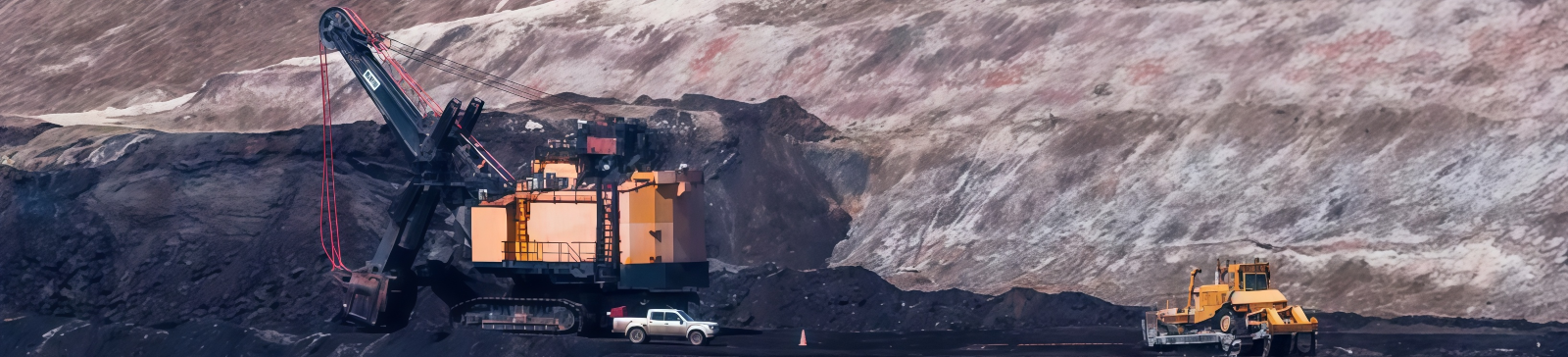
Introduction:
The boom, or dipper stick excavator, is a working device of an excavator, also commonly called the boom or arm. Its main function is to control the digging and loading actions of the bucket. The arm connected to the frame is longer, hence the common name "boom," technically called the "moving boom"; the arm connected to the bucket is shorter, hence the common name "arm," technically called the "stick." Therefore, they are commonly referred to as the boom and arm.
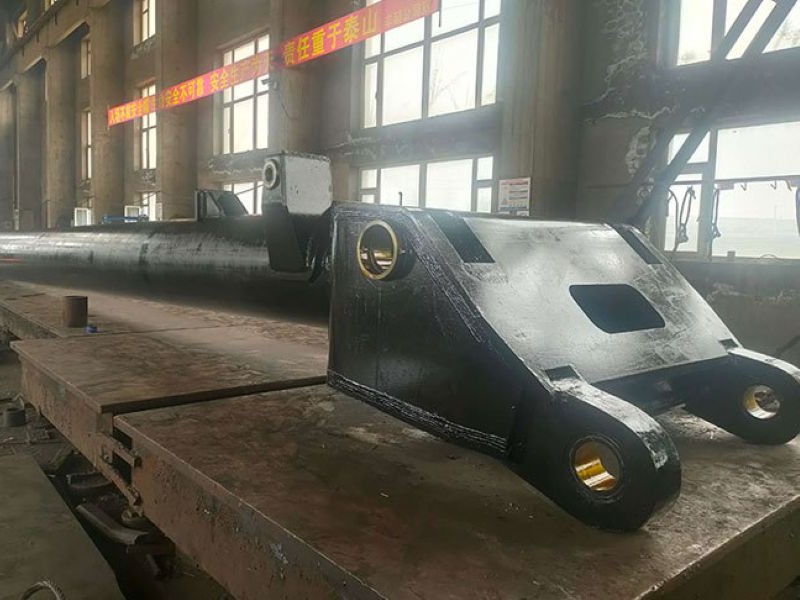
Stick: The dipper stick excavator is generally a symmetrical, equal-width, straight, integral, closed box-shaped welded component. The following sections will explain the structure, working principle, and operation process of the dipper stick excavator in detail.
Structural form:
The dipper stick excavator is not solid but uses a box-shaped structure, meaning the cross-section is a rectangle welded from four steel plates, with nothing in the middle. Steel is the material best suited for excavator booms in terms of strength, rigidity, fatigue performance, machinability, and economy. The boom and dipper stick excavator cross-section height cannot be too large, and torsional resistance must be guaranteed. The box-type structure has the bending resistance equivalent to two side-by-side I-beams, while its torsional resistance is superior to the sum of two individual I-beams.
Dipper stick excavator working principle:
The excavator's working device uses a linkage mechanism, and the movement of each part is achieved through the extension and retraction of hydraulic cylinders. The connections between all components of the backhoe working device are hinged, and various actions during the digging process are achieved through changes in the stroke of each hydraulic cylinder.
stick : The stick is hinged to the upper end of the boom. Utilizing the stroke changes of the dipper stick excavator cylinder mounted on the upper plane of the boom beam, the stick excavator can rotate around the hinge point at the upper end of the boom.
stick excavator working process: Using only the stick cylinder: When digging using only the stick cylinder, the movement trajectory of the bucket teeth is an arc centered on the hinge point between the dipper stick excavator and the boom (the arc from the maximum depth B to the stopping surface). This digging method achieves maximum digging depth when the boom is at its maximum tilt angle and also has a long digging stroke, ensuring a full bucket even in hard soil conditions. This method is commonly used in actual work.
When it's necessary to change the digging range or working dimensions, the dipper stick excavator is typically replaced, or several adjustable hinge holes are added to the stick excavator to connect with the boom end. Therefore, we equip the same model with sticks of different lengths and specifications during production. Besides integral sticks, there are also modular sticks; removing the extended section of the stick creates a shorter stick. Furthermore, when the excavator's operational requirements change, such as switching between front and backhoe operations, the position of the stick cylinder can be adjusted accordingly. Generally, for backhoe operations, the stick cylinder is placed on the upper part of the boom. For front shovel operations, the stick cylinder is placed on the lower part of the boom to ensure that the large chamber of the stick cylinder functions effectively during digging, generating greater digging force. The bolted combination dipstick excavator changes its length by altering the position of the connecting bolt holes in the two parts.