

The old replacement process for track rollers for electric rope shovels involved on-site trench excavation, while the new process uses hydraulic jacks. This article compares and analyzes these two processes to provide helpful information.
Electric shovels, as advanced and large-scale mining excavators, boast high excavation output and efficiency. However, their large size and weight limit their maintenance and repair capabilities, placing higher demands on the technical and operational skills of maintenance personnel. During maintenance, it is crucial to select suitable repairmen and prioritize safety. This article compares and analyzes the replacement processes for old and new track rollers for electric rope shovels.
Electric shovels have 16 support rollers and 2 rear idler rollers, symmetrically mounted on the side frames on both sides of the chassis. The 16 support rollers are mounted at the bottom of the side frames via pins, secured in place by locating pins and cotter pins to prevent rotation. The machined spherical surface of the track rollers meshes with the recessed raceways of the track pads, distributing the entire weight of the equipment onto the track pads. When the electric shovel moves and the track surface is constantly wetted, excessive wear occurs, requiring replacement. The track rollers will roll relative to the track pads along their raceways. Otherwise, the track frame and track pads will come into contact and wear together, potentially paralyzing the entire walking system. The role of the track rollers and idler wheels is so crucial that their replacement process becomes a key aspect of maintenance. The quality of the replacement process directly impacts production efficiency and worker safety.
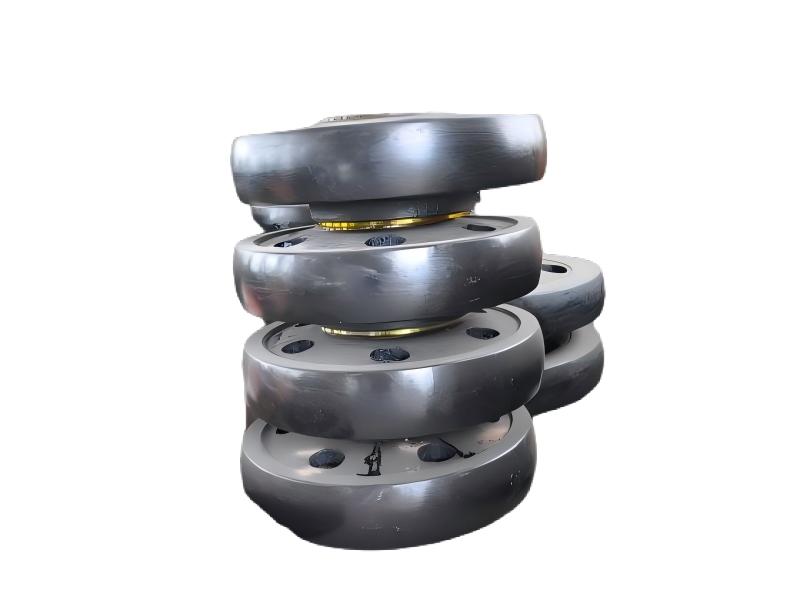
Replacement from the old process: On-site installation of track rollers in the mine pit involved digging a 1.5-meter-deep pit in relatively solid ground. The electric shovel operator was directed to move the shovel to the vicinity of the pit, dismount the tracks, and continue moving the shovel until the track roller was suspended above the pit. The pin was then removed using a front-loading machine or bucket towing. The front-loading machine then transported the track roller from below the pit to the installation position. A crane or truck-mounted crane was used to lift the track roller axle to the mounting hole for alignment and installation, completing the axle assembly.
The specific process flow is as follows: Site selection - Pit digging - Shovel movement - Track dismount - Shovel movement - Axle removal - Axle installation - Track reconnection.
Replacement from the new process: The new replacement process uses two hydraulic jacks to raise the electric shovel side jack to a sufficient height above the ground to complete the disassembly and assembly of the track roller. The specific process flow is as follows: Site selection - Track roller movement - Jack placement - Lifting the electric shovel - Track removal - Track roller disassembly - Track roller assembly - Track reconnection. Site selection and track roller movement are the same as the old process, with a designated person directing the electric shovel to a relatively flat and solid base. The difference lies in the disassembly and reassembly of the track rollers and tracks. Because the new process uses hydraulic jacks, the electric shovel is lifted to a certain height, making the disassembly and reassembly of the track rollers and tracks relatively simple and quick.
We will update with detailed processes for replacing track rollers for electric rope shovels later!